Old Photos & Mold Dogs | A Love Story

Friday, October 30th, 2009

Last night I sat down and shuffled through several boxes of old family photos, putting aside the ones I’m going to send off to a great little company I just discovered, called ScanCafe. They very inexpensively scan and repair old prints, slides and negatives by hand. I love the idea of getting my old pictures digitized as a way to “back up” these priceless memories, but it’s also the simplest way to easily share them with loved ones and future generations. I ordered their Gift Box, which allows you to stuff as many photos as you can fit into it for $150, postage prepaid and fully insured. I got at least 500 pictures into the box comfortably. It will be 4-6 weeks till I get them back but you’d have a hard time paying a small family of Malaysian pygmies so little to do so much. Not even Nike could pull that off.

Anyway…

Most of the shots I put aside to be sent away were from my early childhood, some from before I was born. At the end of this epic sorting exercise, my lovely and loving counterpart, Shannon, commented on the nearly ubiquitous presence of dogs and other furry critters in these faded images of my family and friends. Sure enough, dogs were always a part of our world. I cannot recall a time when we didn’t have at least one, if not three and sometimes even more! They were seemingly always flanked by their requisite feline companions too, not to mention the horses, rabbits, goats, turtles, hamsters and occasional goldfish.

My father used to answer the phone, “Earle’s emporium and petting zoo!”

I am not kidding.

Neither was he.

It was a great way to grow up, except for the fact that I was allergic to most of our pets, but this never really stopped me from spending as much time as I could with them, especially the dogs. The three main players in my early memories were Brandy, Polo and Lady (seen in the pictures above and below). We’d spend countless hours running through the woods or we’d just as happily find ourselves curled up together on the sofa watching The Dukes of Hazzard. The relationship was profoundly deep. They took care of me and I them. There was an overwhelming sense of comfort and mutual affection. I miss them terribly.

The dogs were such a big part of my life as a kid that it should really come as no surprise I would gravitate toward a business which revolves around these fantastic creatures. Truth be told, the dogs we had when I was young were not really the trained type, rather they mostly had us trained. Don’t let the picture to the left fool you.

Until I began working with Oreo, I wasn’t even remotely aware of how incredibly diverse dogs’ abilities are. I now believe that dogs are much like humans in many ways and perhaps this is why we are so closely bonded to them. For example, most of us talk about one day retiring and being able to relax all day when, in fact, the very act of retirement often brings on depression, especially in men. This sudden lack of purpose can really send some people off the deep end. Dogs are much the same. They love to work. They love to help people. They love to have a purpose and they love the appreciation and approval they receive for a job well done. Who doesn’t? Also, we all love to grow and learn and there is no better way to do that than through doing something you enjoy. We learn best when we are having fun. Working dogs aren’t really working. They’re playing and learning at the same time. It just so happens that while they play they’re also purposeful and productive. What could be better? If only we humans could more easily find ways to play for a living. I think Mark Twain said it best, “The secret to success is making your vocation your vacation.”

It was Winston Churchill who said, “You make a living by what you get. You make a life by what you give.” In that vein, we have much to learn from dogs, not the least of which is tireless service to others in the name of love. As you might imagine, I have thought and read much on the subject of the relationship we share with these precious four-leggers. People send me articles nearly every day about dogs saving peoples’ lives and other amazing things that don’t make it onto the nightly news often enough. Everyone knows about dogs used in law enforcement to sniff out bombs and drugs, or those trained to assist the blind, and for search and rescue. Did you know that there are bed bug detection dogs? Cancer detection dogs? Seizure alert dogs? How about diabetic alert dogs? I just read a story about a dog trained to detect peanuts in public places to help protect an adorable little girl who is deathly allergic to this otherwise harmless little legume, which I love almost as much as Oreo does. A few weeks ago I read about dogs being trained to find illicit cellphones in prisons. Check out the video below.

Our longstanding partnership with dogs dates back to ancient times. Even the mythological Orion had his hunting buddy beside him, Canus Major. The history of the relationship between Canis familiaris and homo sapiens is a rich and interesting one worthy of further discussion. I’ll have to post something on that in the months to come.

Inside a dog’s hypersensitive olfactory organ are upwards of 220 million receptors, compared to our measly 5 million, making their sense of smell significantly stronger than ours, by some measures 100 times more powerful. This fact makes me wonder why they are so overwhelmingly attracted to the stinkiest of stuff, but that’s another discussion altogether.

Mold Dogs do not sniff mold any more than a drug dog sniffs cocaine. They are actually smelling the microbial gases emanating from the mold growth, which generates the musty odor we equate with the presence of mold. Unlike human or even electronic noses, dogs can pinpoint the source of the smell with great ease, making our job ridiculously easy, eliminating the guesswork and reducing the size of the repairs and remediation to the smallest possible dimension. This saves time and money. Everybody wins.

Invariably people ask us about the safety of the dogs. This is something that we take very seriously. Under no circumstance would we ever put our canine partners in harm’s way. Just to put this into perspective, Oreo sleeps in our bed, just as my dogs always have, as you can see in the picture to the right. She spends nearly every waking (and many sleeping) moment beside me. If there was even the remotest chance that there was any risk to her health or well being, I would immediately take her out of service. She’s my baby and I would do anything for her. Absolutely anything.

To further explain how we protect them, according to our Mold Assessment Protocol, before we ever bring a Mold Dog into a building, we first do a visual inspection to determine if there are any potentially insurmountable distractions which would hinder the inspection or present a possible hazard. If so, we do not bring them into the building. Also, if there is visible mold growth, we don’t need to use the dogs since their sole purpose is to help sniff out the hidden stuff, so they are never directly exposed. When we do use them, it’s the briefest part of the inspection. The canine-assisted portion of a mold inspection performed by 1-800-GOT-MOLD? in a 5,000 square foot house takes no more than 15 minutes with an experienced dog and handler team. The rest of the time is spent talking with the clients and investigating what we found with the Mold Dog’s help and with our other tools while they wait comfortably in the (heated/air conditioned) van. It’s quite the cushy life being a professional dog in our world. They’ve got it pretty darn good if you ask me.

For that matter, so do we. There’s really nothing like the lifestyle afforded by doing what we do the way we do it. Performing a couple of inspections a day, five days a week, provides a very, very comfortable living while allowing ample time to truly live a great life. Where else is walking your dog actually part of the job description? It’s a very touching experience when we help a family regain control of their health and and find peace of mind, and we do it all the time. When one person in a family heals the whole home heals. It’s a great privilege to be able to provide such a powerful and lasting solution for people who are suffering in the very place where they should feel safest, and our customers love us for it. Oreo gets more holiday cards than I could have ever imagined.

It’s now time for us to take what we’ve developed nationwide. There’s never been a greater need for what we do nor a company better positioned to fulfill that demand. 1-800-GOT-MOLD? and the other Mycelium companies were created with the sole purpose of improving the quality of all of the lives that we touch, and I mean everyone. Our customers, investors, franchisees, vendors and co-workers are all positioned to enjoy richer more meaningful lives as we broaden our reach through the expansion of our brands.

It’s an exciting time!

Warmly

JE

Up your nose…

Tuesday, September 15th, 2009

Not sure where this is going?

Did you know that mold is the primary cause of nearly all cases of chronic sinusitis, the most prevalent long-term illness in America, affecting over 37 million Americans, according to the Mayo Clinic? If you do the math that means it affects 12% of the population, or one of every eight people you know! I have to admit, I had no idea this was such a massive problem until I began going into homes to help people get control of their indoor environments.

So now we’re going up your nose…

What exactly is chronic sinusitis? In the simplest terms, sinusitis is a condition in which the tissue lining the sinus cavities becomes inflamed and swells up. Bacteria and mold spores, amongst other things, can get trapped in the folds of the sinus tissue, causing painful sinus infections and further complications, including further swelling, trapping more bacteria, fungi, etc., compounding the problem. Breathing problems, awful headaches and difficulty sleeping are just a few of the myriad problems that sinusitis sufferers have to deal with, not to mention the treatments; drugs, sinus irrigation and, worst case scenario: surgery. The “chronic” part is how long it lasts. A general rule of thumb is that episodes of chronic sinusitis last a month or more. Much less than that and they are referred to as “acute.”

Chronic sinusitis is caused and/or aggravated by a variety of different things including food allergies, environmental irritants such as cigarette smoke, VOCs (airborne chemicals) and airborne allergens such as pollen, mold and the other byproducts of dampness, including the MVOCs (musty smell) molds produce, dust mites, etc. The list is long…

Antibiotics certainly have their place in medicine but are wildly over-prescribed in general, with no exception in the case of sinusitis, even though they have been proven in several studies to be ineffective in many cases. Since antibiotics are used to treat bacterial infections and the infections are really caused by the inflammation, the antibiotics are treating a symptom rather than the cause. In fact, antibiotics seem to often complicate things, making some people susceptible to yeast overgrowth and other lovely things which we need not elaborate upon here.

The big question is how to prevent the inflammation in the first place or otherwise get it under control. So that’s where this thing is really going, in case you’re wondering…

Your nose is actually a filter of sorts, and we are constantly barraged with a plethora of things which have the potential to throw our immune system into a tizzy. The little hairs and mucus and other glorious components of a well-formed sniffer are designed to trap this unwanted junk and make it easy to get rid of it. Just blow your nose.

Part of the problem is that stuff we’re allergic to can get trapped in the mucus against this relatively sensitive and reactive tissue, causing or aggravating the problems we’ve already discussed. Clearly, we all can do a better job of limiting our exposure to things that are bad for us. (Think: second helpings, that last glass of wine, negative people, sword swallowing, etc.) But for those of us who breathe and work and go outside and engage in other such things that are pretty fundamental to normalcy in our world, there’s really no way to completely eliminate exposure to these nasal irritants, unless you’re inclined to don a low-profile respirator whence strolling about, or a fashionable mask like the lady on the scooter below.

[PHOTO CAPTION: I took this picture two years ago while in Taiwan getting a component made for our GOT MOLD? Test Kit. Everyone wears these masks because the pollution is so bad. What's also amazing is the inconceivable number of scooters on the roads in Taipei, like swarms of bees. Look closely at the picture above and notice the precious cargo that was watching me while I took the photo from a cab. Incredible!]

So it’s with the knowledge we really can’t avoid exposure to allergens and irritants using practical measures, tens of millions of people relinquish control to their allergy medications.

What a slippery slope it is when we treat symptoms rather than the root cause. This is where I get a little uppity, so please forgive me.

Too often we have had to relearn things in our culture that as a species we have already known for thousands of years. It’s totally ridiculous, in my not-so-humble opinion. Look at what we’re now discovering about the body and nutrition even though the Chinese knew of it thousands of years ago, or how commonly wives’ tales carry genuine wisdom. And the power is usually in the simplicity.

So here’s the setup for the wind-down:

If something irritated your skin, the first thing you would do is wash it, right? You wouldn’t take a pill, would you? That would be silly. And we think nothing of showering once or more a day. To do anything to the contrary would drastically impact most of our social lives, and most of us need all the friends we can get.

In Indian medicine, known as Ayurveda, they practice a method of nasal irrigation, rinsing out the nose and sinuses, with a device called a neti pot.

Yogis have done it for hundreds of years claiming numerous physical, spiritual and emotional benefits (they are connected, aren’t they?). After all, the words spirit, inspiration and respiration are similar for good reason. The Latin root is spirò and it means breath/life energy. To breathe well is the first step in living well.

The wisdom of Q-Tip commercials in the eighties informed us that you should never put anything in your ear smaller than your elbow. Apparently your nose runs under a different set of rules. Hopefully after you put this into practice, your nose won’t run at all.

The act of rinsing out the allergens and other junk stuck in your mucus isn’t exactly dinner conversation, but it simply makes scents (ok, it makes sense…forgive me, again). You will notice that you will smell better (Well, not you exactly. Your nose will smell more efficiently. You will still smell exactly the same.) and food will taste better after you do this too.

Lots of people who don’t suffer from sinus problems, and who aren’t yogis or even aspiring to become one, do this and love it, but anyone predisposed to this kind of ailment might want to consider this as a normal part of their daily hygiene. I’m not sure what this means, but Oprah’s a fan of the neti pot! Like most preventive measures originating out of Eastern wisdom, this method is dismissed by many physicians. Others are simply unaware of it, believe it or not. A few that I know are strong advocates, such as Wellington Tichenor, M.D in New York City, who also happens to be a rarity in other ways too. His patients never stop raving about him. I know because we’ve helped a good number of them.

There are many kinds of neti pots available. It’s recommended that you use ones that are made of ceramic like the one above. Plastic ones can leach chemicals that you don’t need swirling around inside your sinus cavities, even for a few minutes. I won’t bore you with how to do it and all that jazz; there are countless videos on the web that do a great job in that regard. I think the one below is the most practical even though it’s about as exciting as watching paint dry.

One the other side of the spectrum is this one, where the guy starts off with water and then proceeds to try coffee and Scotch. Do not try this at home, unless you just can’t help yourself. In this case, your problems likely extend well beyond sinusitis.

Anyway, that’s a long-winded piece on a very simple concept, but it’s one that I think holds a lot of value for those not yet initiated to the neti pot and its manifold benefits.

As a mold inspection company that specializes in sniffing out hidden mold problems in homes, people hire us all the time to check their houses for mold because of mysterious chronic illnesses like indoor allergies, chronic sinus problems, asthma that seems to get worse indoors along with many other potentially mold-related issues. As much as mold is our business, I hate to see the suffering that comes along with it. I think it was the Buddha that was quoted as saying, “Pain is inevitable, suffering is optional.” While that quote runs much deeper than the context of this rather lengthy post, with the right tools and awareness, pain can propel us to find lasting solutions to our pain, helping to prevent the unnecessary suffering that so many people endure every day when their home isn’t as healthy as it should be.

It’s our mission to help in whatever way we can. So if someone you care about suffers from this all-too-common ailment, you might want to forward this to them. They might thank you.

So will we.

Another Sustainable (?) House Is ‘Boerne’

Friday, August 7th, 2009

Very few homes are LEED (Leadership in Energy and Environmental Design) certified and even fewer can sell tickets for admission. The concept of the aptly named Boerne House in Boerne, Texas was birthed by Griz & Karen Adams with the assistance of architect Ben Adams, AIA. It features nifty things like driveways and sidewalks made of pervious concrete, which allows rainwater to drain right through, minimizing runoff. The house is heated and cooled geothermally, literally tapping right into one of Mother Nature’s most abundant, sustainable resources.

This stuff is so cool, it’s hot. (Sorry, I couldn’t resist)

There are many houses utilizing these technologies, but I cannot recall one that has bundled such an abundance of them into one package. The website for the project is right here. It’s worth a look.

The owners are holding an open house this week and admission is $5. The proceeds are going to a local environmental group. So if you happen to be passing through the San Antonio area over the next few days…

The main question I come away with is this: Is this really sustainable? The upfront costs of going this route, especially with LEED certification, are so high, it makes us wonder when it will be available for the masses. Should living green require so much green?

Obviously there are lots of low and no-cost ways to lighten the load on the planet that our children will inherit, but the word “sustainable” needs to be examined, as many overused words in our lexicon should be.

In the meantime, these pioneers are certainly living examples of what can be done with some additional capital investment, solid guidance and detailed planning driven by an apparently genuine concern for the planet, not to mention the obvious potential health benefits and the newly minted bragging rights that come with a minuscule energy bill.

July Roundup | Not The Same Mold News

Sunday, August 2nd, 2009

I know, I know. It’s not July anymore, but how can you roundup a month that isn’t over?

So now that August is upon us, here it is.

And July has been very interesting, indeed.

We had the Acting Surgeon General issue a ‘Call to Action to Promote Healthy Homes.’ This initiative calls for a greater awareness about all sorts of things and mold is only a small part of the overall message, but what’s great is that it concisely speaks intelligently on the subject of mold awareness, what to do if you have a mold problem, and more importantly, what not to do. Click here for a PDF of the Call to Action (See section 3, page 31)

Also last month, the Centers for Disease Control (CDC) announced the launch of a website they created to track the link between environmental pollutants and specific illnesses. It’s a mash-up of medical and environmental data compiled onto maps to show geographical representations of things like cancer clusters. Currently the scope of the project is limited to a few common environmental illnesses such as asthma and lead poisoning and is primarily focused on air and water quality, which suits us just fine, but they promise to get into a much wider range of ailments, irritants and toxins. It promises to yield some useful information about where and why people are getting sick in certain areas more than others. The Daily Green has a little more to say about the program’s shortcomings, but it’s a work in progress and clearly I think it’s a move in the right direction, albeit a relatively pricey one. They’ve spent $200 million so far and they’re just getting warmed up!

Last, but certainly not least, the World Health Organization (WHO) has released their first Guidelines on Indoor Air Quality: Dampness and Mold. Like all of the documents of its kind, it has its flaws, but the continued movement of governments and government agencies in this direction is certain to be far more beneficial than harmful. Ignorance is always the enemy and lack of awareness is where ignorance begins. Rarely will you hear a rallying cry from me when it comes to government intervention of any sort, but this kind of effort should help foster a higher, healthier level of awareness about mold and the other negative byproducts of dampness indoors, hopefully creating a more rational approach to something which too often elicits panic from so many people.

My favorite little snippet from the WHO piece was when they acknowledged each person’s right to a healthy indoor environment, including safe indoor air.

Life, liberty and the pursuit of happiness…and safe indoor air. They seem to have left that last part out of the Declaration of Independence, another fine event from the most recent month past. No doubt it certainly trips up the poetic rhythm, but something tells me that the Founding Fathers might not object to a little creative license in this respect. After all, the pursuit of happiness is pretty pointless when you can’t freely breathe.

Till next time…

Dog Is My Co-Pilot – Lessons From My Partner (and Other Four-Leggers)

Friday, July 3rd, 2009

With all six legs, Oreo and I hit the ground running in 2003 and did more than 1,500 residential mold inspections over a dense and powerful four+ year period. We had an absolute blast while making a HUGE and immeasurably positive impact in the lives of hundreds of families. As we expand our reach, the goals have shifted; hundreds of inspections per day, tens of thousands of lives improved…monthly.

Being a Wall Street refugee, it was quite the transition for me.

I used to arrive at work at 6am and work till 8pm or from 2am to 4pm.

Time to relax? I didn’t have time for lunch.

I love a good work ethic, and Oreo has reinforced this appreciation. What she has also taught me is the value of truly living; of making a life in the midst of making a living.

Here are some of the lessons I have learned from her:

Live in the moment

It’s so cliche, so obvious and yet so fleeting and elusive. We need all the reminders we can get.

Dogs seem to have a different spin though.

Everything is forever. When I leave for five minutes, she thinks I’ll be gone forever. When I return she hopes I’ll be back forever. There’s something reassuringly tortuous about eternity. She savors every moment.

Everything is now. Now is the best time to do EVERYTHING! Take a walk or a run, eat and eat and eat, run around in circles, cuddle up, take a deep breath…and sigh. Again, she savors every moment.

Instant forgiveness

BONK! I look down at Oreo with my heart sinking and her blinking while still staring lovingly upward, moments after the refrigerator door collides, with a stunning thud with her precious little cranium. Amazingly, there’s no loss of love. She knows I didn’t mean it. “Clumsy human,” she must mutter to herself, but only seconds later it’s like nothing ever happened. Try THAT with your neighbor (or husband, wife, girlfriend or boyfriend).

“Why hold grudges?” Oreo asks. Life is too short for humans . It’s even shorter for dogs.

Get outside and run!

It’s always a good time to go outside and play.

Try this for a morning pick-me-up: Break into a sprint for no discernible reason, then…stop on a dime to smell the pavement for 5-7 savory seconds.

Then jog away.

Feel better?

I sure do, just imagining you doing that!

Stop to smell the roses

It’s kind of like the one above, but very different and worth repeating even if it wasn’t.

Alright, Oreo doesn’t care much for roses. In fact, for a creature with such an overwhelmingly powerful sense of smell, I’m perpetually amazed at her affinity for foulness. That aside, there’s no better ambassador for the Directorate of Loving Life than Oreo.

Talk to strangers

People love to be noticed. Dogs notice everyone and they aren’t shy about saying hello. I’ve seen Oreo brighten thousands of peoples’ days with an enthusiastic acknowledgment of their existence.

While I love the way she approaches strangers, I still think shaking hands is an improvement over Oreo’s typical initial social exchange with other canines we encounter.

Appreciation and Value

It’s an amazing word; appreciate.
app⋅pre⋅ci⋅ate [uh-pree-shee-eyt]
1. to be grateful or thankful for: They appreciated his thoughtfulness.
–verb (used with object)
2. to value or regard highly; place a high estimate on: to appreciate good wine.
3. to be fully conscious of; be aware of; detect: to appreciate the dangers of a situation.
4. to raise in value.
–verb (used without object)
5. to increase in value: Property values appreciated yearly.

When we appreciate someone, they certainly appreciate in value, to both parties. A grateful thought, look, touch or word can transform a day. Such a powerful thing, appreciation is. Like beauty, value is in the eye of the beholder. Appreciation is about recognizing and acknowledging value. We all want to be appreciated and valued and dogs do it SO well.

An animal’s attention and appreciation can lift even the most morose soul out of a literal lethargy…with just a simple expression of affection. Is it any wonder that we gravitate toward the creatures that appreciate us so lavishly?

Loyalty is not an option

It’s not an option. Oreo has made it clear that I’m her human. So I’m loyal to her. She’s the only dog in my bed.

Will work harder for love and fun than for money

OK. She’ll work hardest for peanut butter, but love and fun are in the running for second and third. If we’re making a living but not doing what we love or having fun doing it, we are most certainly not making a life. I don’t think anyone on their death bed ever said, “I wish I’d spent more time in the office.” Someone once told me that we will regret most the things we did not do, far more than the things we did. Is there anything heavier than the weight of regret? What are you working for?

Ignorance really IS bliss!

Sometimes we’re better off not knowing about our limitations. Too often we fail to strive because someone tells us that how hard it’s going to be.

There have been too many stories of people who outlived “death sentences” handed down by well-meaning physicians, only because their families prevented them from knowing the prognosis!

How to say so incredibly much without saying a word

Words sometimes seem so unnecessary

Take a nap

Most great thinkers took short naps during the day. Edison, Einstein, JFK…

Need I say more?

And now this:

If you can start the day without caffeine,

If you can get going without pep pills,

If you can always be cheerful, ignoring aches and pains,

If you can resist complaining and boring people with your troubles,

If you can eat the same food everyday and be grateful for it,

If you can understand when your loved ones are too busy to give you any time,

If you can overlook it when those you love take it out on you when, through no fault
of yours, something goes wrong,

If you can take criticism and blame without resentment,

If you can ignore a friend’s limited education and never correct him,

If you can resist treating a rich friend better than a poor friend,

If you can face the world without lies and deceit,

If you can conquer tension without medical help,

If you can relax without liquor,

If you can sleep without the aid of drugs,

If you can say honestly that deep in your heart you have no prejudice against creed, color, religion or politics,

Then, my friend, you are almost as good as your dog!

- Source: Unknown

Drywall: And Other Exciting Tales

Sunday, June 28th, 2009

Bear with me…

I know your pulse isn’t quickening with the thoughts of drywall, but this is important. Chances are, it’s in your house and will be in every house you live in for the rest of your life. You might want to know what the walls are made of.

There’s no doubt that the quality of home construction has dropped precipitously over the years. Cheaper materials and shoddy practices became the rule rather than the exception.

One of my mentors is fond of saying that we now build self-composting homes…just add water.

Sadly, he’s right! We practically construct our homes out of paper mache.

Part of the problem is the type of drywall that’s used in 99% of new home construction.

Drywall was at one time considered an amazing innovation. It revolutionized the construction industry by creating a low-cost, high-speed alternative to plaster. And it reduced the need for skilled labor. (Look where that’s gotten us. Bring back the artisans!)

What we now know is that for all of the benefits of drywall as a building material, it also has serious drawbacks. For example, it is the food on the buffet of building materials from which mold most likes to eat. Even “green board” and other mold or moisture-resistant products are susceptible. The problem lies in the fact that normal drywall is just a sandwich of really absorptive gypsum (a very soft mineral) and paper. When it gets wet, the gypsum drys very slowly and after a few days mold starts to eat the paper, which is made of cellulose; mold’s favorite meal.

The recent surge in awareness about mold has caused the drywall industry to create all sorts of new paperless wallboards, like Georgia-Pacific’s Dens-Armor Plus. Great stuff. I did my whole house in it. Instead of paper, there’s a thin sheet of woven fiberglass wrapped around a very dense gypsum filler within that has additives that keep it from absorbing moisture. Only a few bucks more than regular drywall and worth every penny. It’s highly mold and moisture resistant. It was the best stuff going…

Well, just when I thought I was ahead of the curve by using Dens-Armor Plus (and promoting it liberally on our websites…at cocktail parties…Lamaze classes…you name it), around the bend comes a very cool company in Sunnyvale, California called Serious Materials, and they are likely to turn the building materials industry on its ear. At least, I hope so.

The CEO, Kevin Surace, spoke at the most recent TED conference, which is one of the most elite gatherings of brilliant minds on the face of the earth. Only 1000 invitations go out. Nobody gets to speak for more than 17 minutes, no matter whether you’re Bill Gates or Steve Jobs…or anyone else for that matter. Watch it below, if you like. In fact, dig into the other TED talks on the site when you have a spare 17 minutes to enrich your existence. There’s something there for everybody. You’ll thank me. Guaranteed.

Their new drywall product, EcoRock is not only made from 80% recycled materials, but you can actually recycle it later on down the road (think: renovation) if the need arises. And, of course, one of the main reasons I’m writing about it is that it’s the most mold resistant wallboard on the market while emitting (almost) zero harmful chemicals, unlike most wallboards (surprised?) which often emit nasty gases.

In fact, I sent around an article a while back that I wanted to post on this blog, so here’s the chance. You might remember hearing about the Chinese drywall that’s in a ton of houses in Florida that were built during the boom.

This stuff is beyond nasty. The gas it emits stinks of rotten eggs, corrodes air conditioning systems, destroys electronics and makes people unbelievably ill. Read what Consumer Reports has to say about it. The only solution is to rip it all out and start all over again.

They should do everyone a favor and replace that toxic stuff with EcoRock. In fact, its priced about the same as regular drywall and it’s 1000X better. So why not?

It’s a no-brainer!

IMPORTANT DISCLOSURE: I do not get paid by Serious Materials…I just love them.

Check ‘em out. Even if you don’t get excited about cool building materials like I do, you’ll still dig how innovative they are. They’re doing well by doing good. America needs more companies like this; benevolent capitalists. We’re BIG fans of that.

Make it an amazing day!

Jason Earle
Founder/CEO
Mycelium Holdings LLC

Welcome!

Saturday, June 27th, 2009

Well, here it is…our new blog.

As you might expect, there will be the typical mold-related updates that you’ve come to know and love (Ok…well, maybe not love. That’s a bit of a stretch…) but, perhaps more interesting to most, through this blog we’ll deliver snippets about emerging and innovative products that contribute to healthy living indoors, amongst other things. There’s so much great stuff coming out all the time.

Also, you’ll surely see company updates as we continue to expand the GOT MOLD? companies. Some of those announcements are in the oven. And they smell awfully good. We’re excited to share them with you soon. Nothing half-baked for you in the offing here.

Speaking of smell.

The FDA has just pulled Zicam off the shelves because of concerns that the zinc in it might cause anosmia (loss of the ability to smell).

As you may know, Zicam is a widely used OTC medication for the relief of cold symptoms and sinus problems. Unfortunately, far too many people suffer from sinus problems as a result of their indoor environment (Click here to read about the connection between mold and chronic sinusitis) and choose to treat the symptom instead of the cause, which is often indoor allergens such as mold and the other byproducts of dampness, like dust mites.

Mold growth indoors has been linked to some of the most prevalent long-term illnesses in America including chronic sinusitis (37 million people), asthma (23 million people) and allergies (25 million+). The big question is this: How many people are taking medication to treat a symptom when what they really need is to do is take a closer look at their home and workplace?

Mold growth can occur quickly. According to the EPA, it only takes 24-48 hours for mold to start sprouting when things get wet. So act quickly.

And with all the rain lately, it’s more likely than ever.

Remember: If you smell a musty odor, you can be sure that stuff is growing.

When in doubt, get mold testing done.

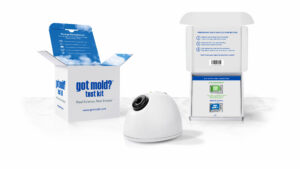
Professional testing can cost thousands and is sometimes inconclusive. That’s why we created the GOT MOLD? Test Kit. For a fraction of the cost, you can test your air in your home or workplace with the same devices professionals use. You’ll get a report in 10 days and if something unusual is detected, you can deduct the $99 cost of the kit from the price of a professional mold inspection performed by a 1-800-GOT-MOLD? (where we have inspectors available).

One caveat:

If you think hidden mold is the issue, you might be right. If so, no amount of non-invasive professional testing will help root out all of the hidden stuff unless a four-legged mold detective is brought through the door along with the two-legged inspector to help sniff out the source. Since our test kit uses the same tools as professionals and we haven’t figured out how to get a Mold Dog into a FedEx box, our test kit has the same limitations that professional inspectors that don’t use Mold Dogs have. Nonetheless, if we have an inspector in the area, you may still always deduct the cost of the GOT MOLD? Test Kit from the price of the mold inspection, even if nothing unusual is detected with the kit.

Anyhow…

Now that I’m done plugging our kit and the dogs, thank you for taking the time to read our first blog entry.

More to come.

Make it an amazing day!

Jason Earle
Founder/CEO
Mycelium Holdings LLC