When we set out on this journey, nearly two decades ago, our goal at 1-800-GOT MOLD? was to leave the world a little bit healthier. And we’re proud to say that over the years we’ve helped thousands of families take control of their health and gain valuable peace of mind.
It’s time to think bigger.
With the creation of the GOT MOLD? Test Kit, we endeavor to help millions.
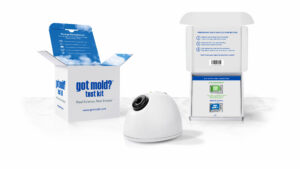
The GOT MOLD? Test Kit offers professional-grade, multi-room mold testing in just minutes and allows you to test your home’s air at your own convenience and at a fraction of what an in-person inspection would cost. It’s truly a game-changer and far superior to anything else on the market.
It’s why we’ve decided to direct all our energies toward the test kit, and will therefore no longer be offering inspections. Don’t think of it as the end of an era—think of it as the beginning!
Our state-of-the-art test kit includes:
- All Lab Fees 💸
- Accredited Analysis by America’s #1 Microbiology Lab🔬
- Free Shipping – Both Ways! 📦
- Reusable BioVac™ Air Sampler (batteries included!) ♻️
- Air-O-Cell® Air Sampling Cassettes 💨
- Easy-to-Follow Instructions 📝
- Detailed Lab Report 📖
- Color-Coded Interpretations 📊
- Legendary Support 🤜 🤛
So please join us on this next step of the journey at www.gotmold.com. Affordable mold testing for all!
If you’re concerned about mold in your home, take a look around and let us know if you have any questions. As always, we’re here to help.
Click to learn more about the GOT MOLD? Test Kit